
SHORT VERSION
Software gets used when using it is the only way the job closes, not when you push the crew harder. The tool you paid for sits unused because entering the job is a second task stacked on the real work, and a second copy always loses to the first. Build the record into the close, so a job can’t be marked done until it exists, and the “nobody uses it” problem goes away on its own.
Where the record actually dies.
A service call comes in, a GFCI in the kitchen that won’t reset. One of your guys drives out, finds it, pulls the dead one, puts in a new GFCI off his truck, tests it, cleans up, collects. Real work, done right.
Then the software wants the material off the truck, a note that says more than “fixed outlet,” photos, and a signature. He’s already backing out of the driveway toward the next call.
So the note says “fixed outlet.” The GFCI he replaced never gets logged. The device and the wirenuts off his truck stock never make it onto the invoice. Nothing there is a discipline problem. The work got done.
What didn’t happen is the record, because the record was a separate step that came after the part he thinks of as the job.
That’s every “nobody uses it” story. The software isn’t where the work happens. It’s a place you go afterward to re-type work that’s already finished. Duplicate data entry loses to real work every time, no matter whose name is on it.
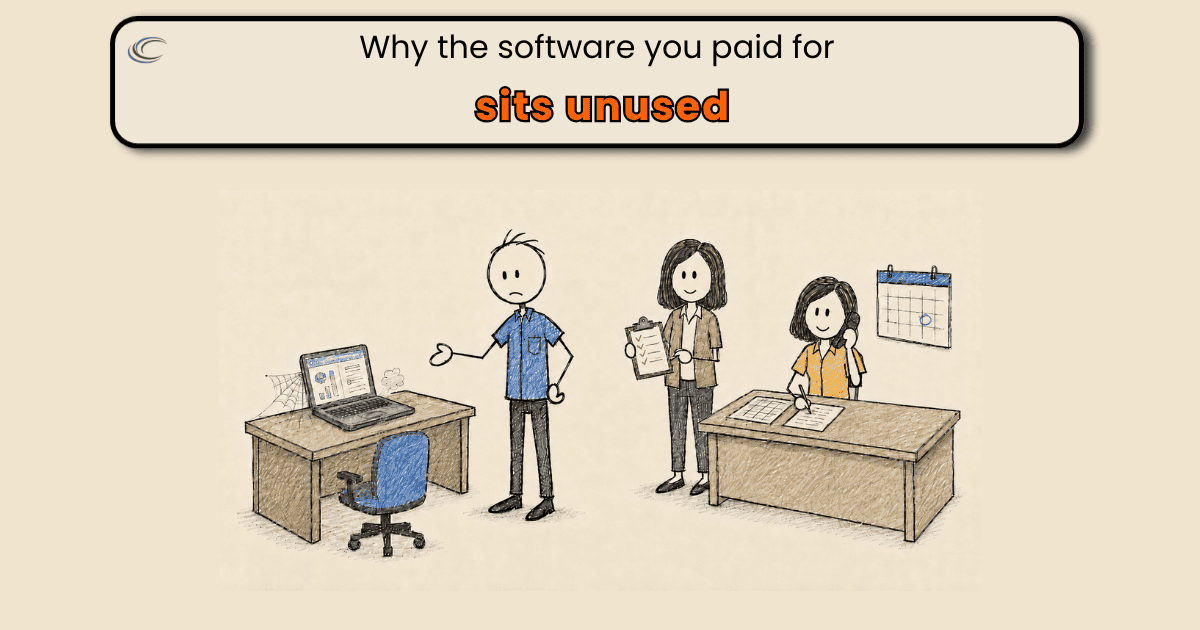
Why “get them on the software” never sticks.
Most shops treat this as an adoption problem. Buy the tool, run a training, push the crew to keep it updated. It holds for two weeks. Then a full Tuesday hits and the record is the first thing to go, because it was never load-bearing. The job closed, the customer paid, and the software got skipped, and nothing stopped.
That’s the tell. If the work can move all the way to done without the record existing, the record is optional, and optional things die under load. You didn’t buy shelfware. You bought a good tool and set it up as a logbook instead of the path the work travels.
Make the record the thing that moves the job.
The fix isn’t another training. It’s making the record load-bearing, so a job can’t move forward until it exists. Not more discipline from the crew. A different shape to the work, where the record is the work instead of a copy of it made later.
In practice that’s one move: the close gates on the record. A job doesn’t get marked complete until the fields that matter are filled, the material off the truck, a real note, the photos. And “complete” is what triggers his pay and kicks the invoice to the office. Miss the record, and the job isn’t done.
Now nobody’s asking your guys to also update the software after the fact. Updating it is how the job ends. Same information he already had in his head, it just stopped being a second copy nobody had time to make.
The invoice should pull from that same record, not from memory. If the new GFCI and the wirenuts off his truck aren’t logged, they don’t get billed, which means logging them is how the shop gets paid for them.
You don’t need the whole platform live to start. Pick the close-out and nothing else. Set two or three required fields in ServiceTitan, Housecall Pro, or Jobber so a job can’t be closed without them. One gate, at the one point every job already has to pass through. The note stops being “fixed outlet” because “fixed outlet” won’t close the ticket.
That’s how the office stops rebuilding jobs from texts and half-notes. The material shows up on the invoice because logging it is the only way it gets billed. Same crew, same tool. The record just became part of how the work moves instead of a chore hanging off the end of it.
FAQ
Should I switch software or fix how we’re using the one we have?
Almost always fix how you’re using it first. Most shops use a fraction of what they already own, and a new platform inherits the same problem the day the training wears off. If the record isn’t built into how the job closes, the next tool sits unused too.
Why does nobody use the software we bought?
Because using it is extra. If the job can get done, paid, and closed without the software ever being touched, then touching it is optional, and optional work is the first thing dropped on a busy day. It gets used when it’s the only path the job can take to “done.”
Do I need ServiceTitan, or is Housecall Pro or Jobber enough?
For most shops your size, the platform isn’t the bottleneck. Any of the three can gate a job’s close-out on the fields you care about. The question isn’t which tool. It’s whether the work is set up to run through the tool or around it.
Is it worth paying for software we only use part of?
It’s worth it if the part you use is load-bearing. Paying for a full platform and using it as a place to store notes after the fact is where the waste comes from. Wire one real step of the job through it, and the rest of the features stop being the point.