
SHORT VERSION
Quotes pile up on you because the price only exists in your head. Fix it at the source. Write down what the shop charges for the work it does over and over, with the exclusions next to it, then say how big a job has to get before it still comes to you. Put a date on that list and one person in charge of changing it when supplier pricing moves. Remodels and plan work still get walked and priced by you. Everything else goes out without you.
Why does every quote have to go through you?
Because for most of the work your shop sells, you are the only written record of what it costs. The price isn’t in the software, it isn’t on a list, and it isn’t in anybody else’s head.
You know what a panel runs at the counter this month. You know a service change means coordinating the shutdown with the power company and you know who has to be on site for it. You know which houses turn into more work than the quote covered once the wall is open.
None of that exists anywhere but you. So when a customer asks what it’s going to run, there is nowhere else for the answer to come from, and the quote waits until you have an hour.
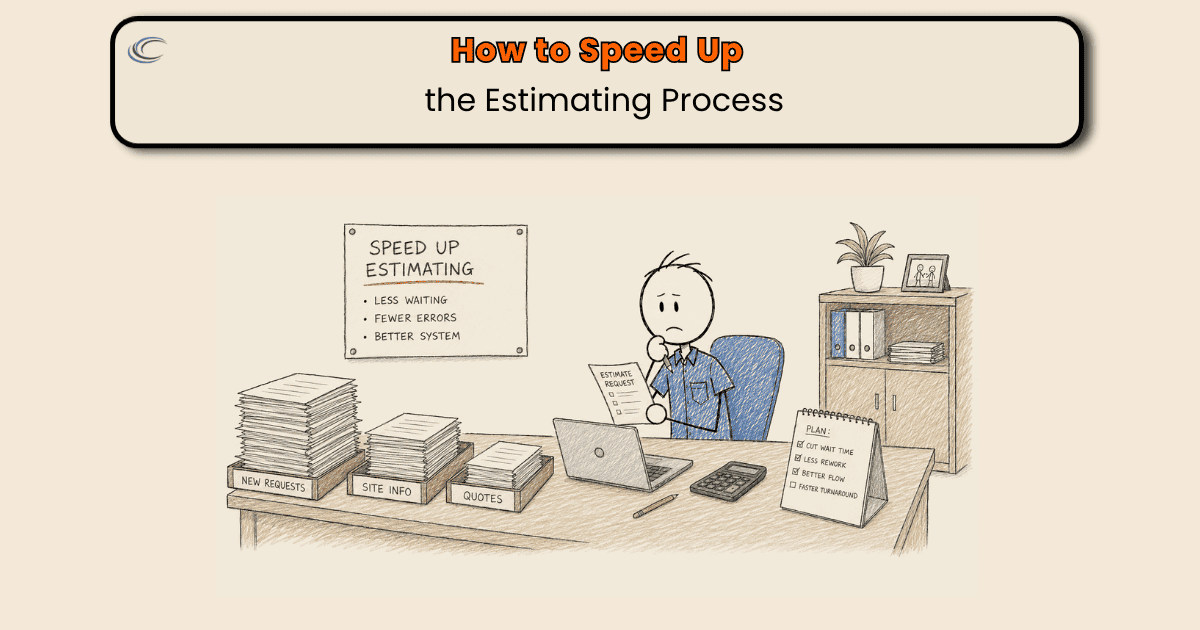
Most of what you quote, you have already quoted
A service change, two circuits added for a kitchen, a charger in a garage, a whole-house surge protector. Your shop has done each of those enough times that the labor and the material aren’t a mystery to anybody who works there.
For that work, the price is not a judgment call. It’s a number you already know.
The rest is genuinely different. A kitchen remodel where the designer is still moving the layout. A tenant improvement priced off plans. A job where nobody knows whether the existing service can carry the new equipment until somebody walks it. Those need a takeoff and somebody who can stand in front of a panel and know what he’s looking at. Those keep coming to you, and they should. Writing down the repeat work is what buys you the time to price them properly.
The price has to live somewhere besides your head
Write down what the shop charges for the work it does over and over, and write the scope next to it. What’s covered, what isn’t, and what changes the number. The exclusions matter more than the price does. Drywall patching, trenching, paint, a permit, a lift, a second man. If those aren’t sitting next to the price, the first quote that goes out without you is going to promise one of them, and you find out about it at trim.
Then say out loud how big a job has to get before the quote still comes to you. Right now the safe move for everybody in your office is to ask you first, because nobody wants to be the person who sent out a price that turned out to be wrong. A stated ceiling is what makes it safe to send the small ones without you. Under the line, anybody who can read the list can send a price out of it, and that’s usually whoever answers the phone.
How does a written price go stale?
What the shop pays for material moves. The panel your number was built on costs something different at the counter than it did the day you wrote it down. Somebody notices a price is low, stops trusting the list, starts checking with you first, and inside a couple of months every quote is coming through you again.
So the list carries a date, and one person owns changing it. When the supplier’s price moves on the material you buy most, the written price moves with it and the date moves with it. Anybody using the list can tell whether the number is still current.
Questions owners ask about this
Which jobs can somebody else quote?
The work the shop repeats and has a written price for: service changes, added circuits, a charger, a surge protector, device and fixture replacements. Anything that needs a takeoff, a plan review, or a look at whether the existing service can carry the new load still gets priced by the owner or whoever does the estimating.
How do I pick the dollar amount where a quote still comes to me?
Start with a number you wouldn’t lose sleep over if one went out wrong, and watch what comes back. If nothing goes sideways over a couple of months, raise it. The value is that the number is stated, so nobody in the office has to guess whether this one is big enough to bother the owner with.
What if the written price is low on a job that turns out harder than it looked?
That’s what the exclusions are for. A written price covers a defined scope, and the conditions that blow it up get named right next to it: difficult attic or crawlspace access, a full panel, trenching, patching, after-hours work. A written price with no exclusions is worse than no written price at all.
Would estimating software fix this?
Not by itself. Estimating and takeoff software earns its keep on plan-based work where you’re counting devices and fixtures off a drawing. It still needs somebody to decide what the shop charges for the jobs it does every week. If that decision only exists in one person’s head, the software has nothing to hold.