
Knowing Whether a Job Hit the Estimate
You closed that panel upgrade out at 19 hours. Quoted at 14. The invoice went out, the customer paid, and the job moved to the next one on the board. You never went back to check if it hit the estimate.
You know the job got paid. Whether it hit the estimate; whether the hours, material, and price actually lined up with what you quoted; takes pulling the original number and setting it next to what the job actually took. If that comparison isn’t a step you’ve built in, you’re guessing every time.
Where the estimate goes after you price the job
The estimate does its job once. It gets the number in front of the customer, wins the bid, sets the invoice. Then the job starts, and the estimate stops being anything except a line in the proposal folder. You log hours, or you don’t. Material comes off truck stock and never gets written down. The job closes, gets invoiced off the original number, and the file gets archived. The estimate and the actual never sit next to each other again.
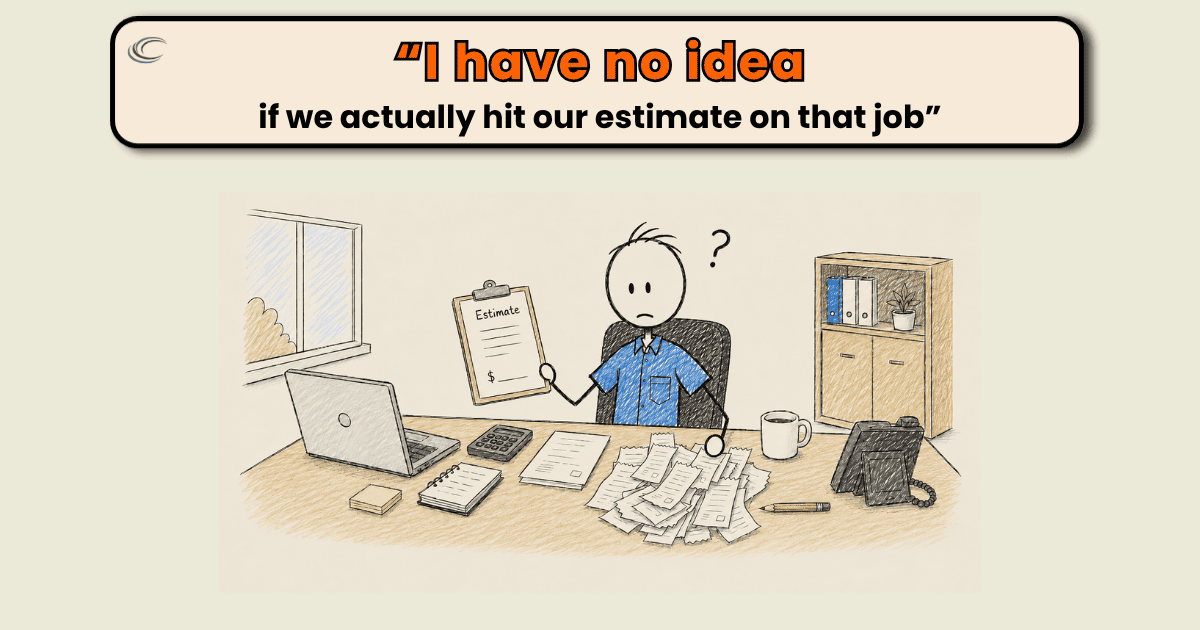
What actually gets missed
You don’t file hours against the bid. Your office doesn’t pull the job cost sheet and set it beside the invoice. Nobody flags a job that ran long, because the invoice still went out at the price you quoted, and the customer still paid it. On paper, the job looks fine. Whether it made what it was supposed to make never gets asked.
The quiet math
That panel upgrade was quoted at 14 hours. It took 19. Five hours of labor that never got priced into the job, at a loaded rate around $65 an hour, is roughly $325 that job quietly lost. One job, you don’t notice. Run three or four jobs a month that miss their estimate by a similar margin, and that’s $1,000 to $1,300 a month walking out the door on jobs that all got paid in full.
Why it slips past you
Your lead electrician wasn’t cutting corners on that panel upgrade. The extra five hours just happened; a run that had to reroute, a wall that fought back, something nobody could’ve priced in ahead of time. Once the invoice went out and the customer paid, there was no reason to think twice. You never built in a step to catch it. Nobody checks the bid against the actual once the file closes.
That panel upgrade is still sitting in your job file. Closed and paid, and you’re not opening it back up to check. Neither is the next one. Or the one after that.