
SHORT VERSION
A quote that sits unsold usually didn’t lose on price. It went quiet because nothing followed it, and following up feels annoying only when it’s unplanned and weeks late. Make the next contact a required part of sending the quote: a date the send won’t complete without, and a customer who’s told it’s coming. Follow-up stops being something you chase and becomes the last step of sending, not a thing you dread doing later.
Following up on a quote after you send it only feels annoying when it’s a surprise. Tell the customer when you’ll check back at the moment the quote goes out, and the follow-up becomes something they’re expecting, not something you’re apologizing for.
Where the quote actually goes quiet
The quote leaves. In your head, and in most software, that’s the finish line. You built the bid, you sent it, you move on to the next thing waiting on you. And then it sits.
Nothing scheduled the next step. The quote went out with no date attached, no reminder, no one who owns the next contact.
So following up depends on you remembering, weeks later, that the panel swap you quoted is still open. You’re running the crew, answering the phone, walking a job. That quote is not going to surface on its own.
That’s not you being bad at follow-up. Sending a quote and following up on a quote are two different jobs, and only one of them got built into how the work moves. The other one lives entirely in your memory, and your memory is already carrying the whole shop.
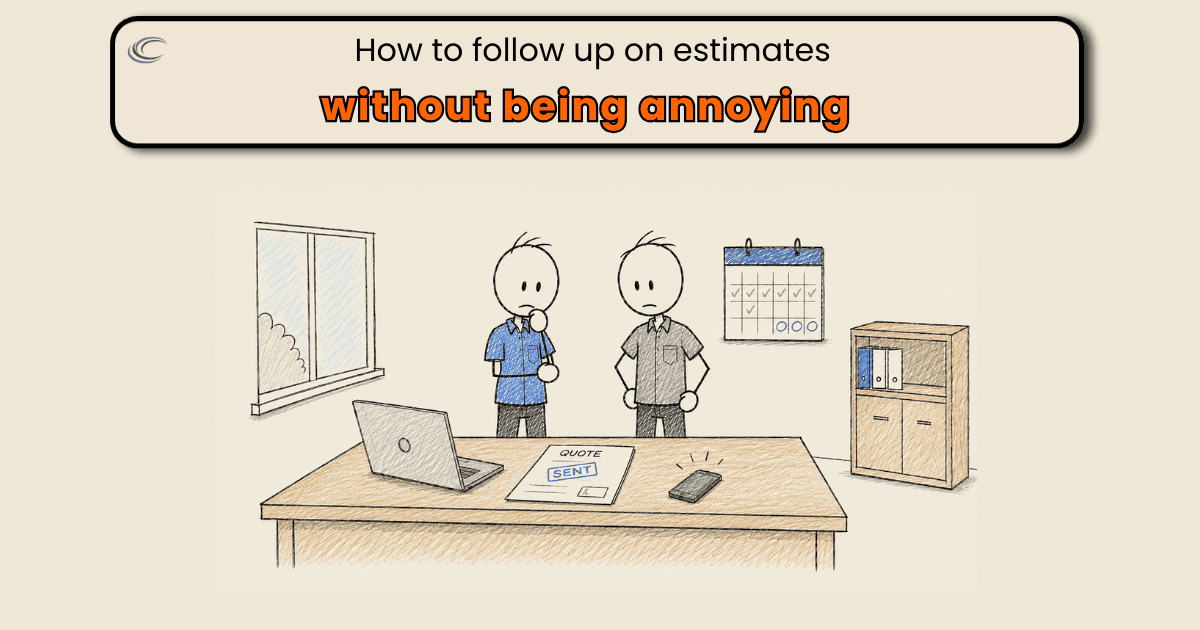
Why does following up feel like you’re being annoying?
Because you don’t want to be the contractor who pesters. That instinct is right. Nobody wants three “just checking in” texts from a guy who’s clearly guessing.
But the pest and a real follow-up aren’t the same thing. The pest is unplanned. He reaches out on a random Tuesday because he finally remembered, with no reason the customer was expecting to hear from him, and it reads as chasing because that’s what it is.
A follow-up the customer was told to expect lands completely differently. “I’ll check in Thursday to see if you’ve got questions” turns Thursday’s call into something the customer is waiting for. It’s the same phone call. It just doesn’t feel like chasing, because you said it was coming.
Follow-up feels awkward when it comes out of nowhere. When the customer already knows it’s coming, there’s nothing awkward about it.
Put the next contact on the calendar before the quote leaves
The fix is one shift: the quote isn’t finished when you send it. It’s finished when the next contact is scheduled and the customer knows it’s coming.
Two things make that real, and neither one is a new habit you have to remember.
First, the next-contact date is a required part of sending, not something anyone sets from memory later. Whatever you already send quotes from, a quote doesn’t count as sent until it has a next-contact date on it. Whoever sends the proposal, the office or you, sets that date in the same motion.
That’s the difference between a system and a good intention. The date stops depending on anyone’s memory, because the send won’t complete without it. This isn’t a CRM you’ll never finish configuring. It’s one required field on the tool you already use.
A quote that goes out with no next-contact date isn’t really sent yet.
Second, the customer hears that date from you first. One line at the bottom of the proposal, or one sentence when you hand it over: you’ll follow up on Thursday to answer anything that came up. Now the check-in is expected, the “annoying” part is gone, and whoever makes the call isn’t guessing about when to reach out.
FAQ
Should I follow up on quotes myself, or have the office do it?
Whoever sends the quote should own the follow-up, and that’s usually the office. If it lands on you, it competes with running the crew, and it loses every time. The point is that one named person owns it, not that the person is you.
How many times should I follow up before I let a quote go?
A first check-in on the date you promised, and one more a week or so after, covers most quotes. The number matters less than having a set rule instead of deciding case by case. When there’s no rule, “I’ll get to it” becomes never.
What do I actually say when I follow up on a quote?
Reference the specific job and ask if anything came up, not “did you decide yet.” You quoted that panel swap or EV charger for a reason the customer cared about, so open there. The call is easy when they already knew it was coming.
How long should a quote stay good for?
Tie it to how long your pricing actually holds, and put that window on the quote in writing. A quote with no expiration invites the customer to sit on it, and invites you to eat a price change if material moved. Stating the window also gives you a natural reason for the follow-up.