
Your board’s been light for three days, and you haven’t said a word about it. You didn’t think you needed to.
Why does a slow week bother the crew more than the owner realizes?
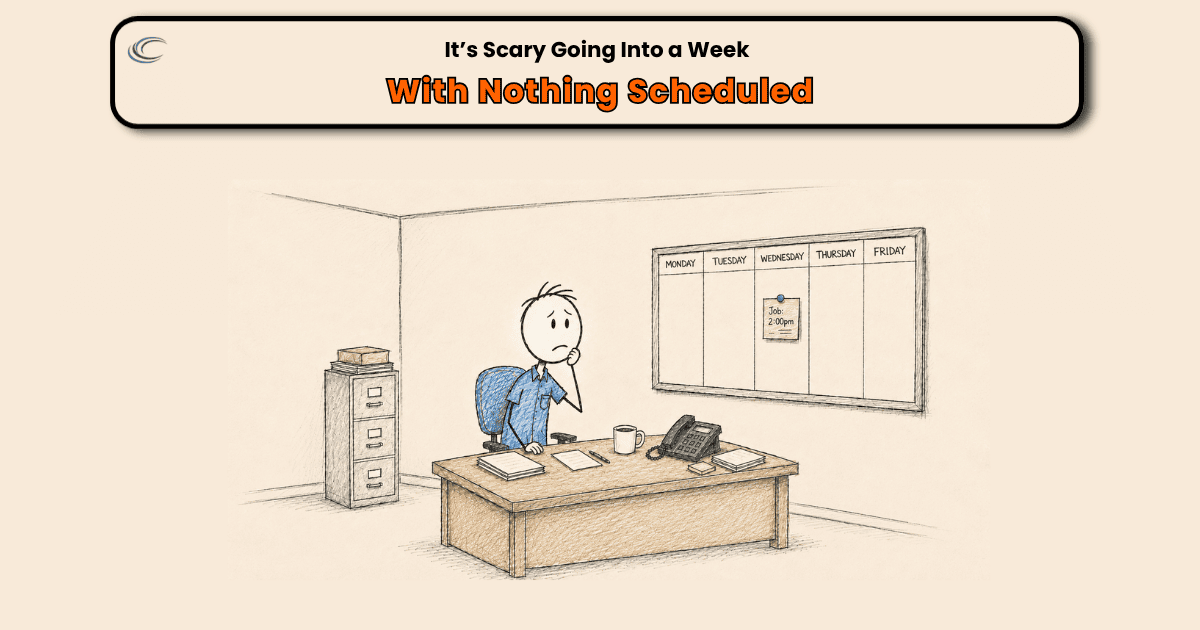
Your crew’s been watching the same thing you have all week: fewer trucks pulling out in the morning, more open days than usual on the board. Nobody’s asked you about it directly. They’re asking each other instead, in the truck, on break, in the group chat you’re not part of.
By the time the phone starts ringing again, half the crew’s already spent a week bracing for something that was never coming.
What fills the silence when nobody explains a light board?
That’s not because you did anything wrong. It’s because nothing at the shop was ever built to tell them different. No standing update. No line built into a Monday meeting to cover it when the board goes quiet. Just silence, and whatever the crew could see for themselves. Whatever they made of that, they made up on their own.
What does a quiet week actually cost a shop?
It costs more than the slow week itself. A crew that’s quietly worried about the job stops bringing up small stuff and starts keeping half an eye on other openings. Staying gets more important than doing good work. Lose one good tech to a worry that was never even true, and the search and the training alone cost more than the quiet week did. Add the months it takes someone new to get back to full speed, and it’s one of the more expensive things a shop can do without meaning to.
What actually stops the crew from guessing?
Here’s what actually changes it. Not a better speech in the moment. Not you finally finding the right words when the board’s light. A standing practice, specific enough to run whether you remember to bring it up that week or not. Five minutes at the Monday meeting, every week, covering exactly where the board stands, slow or full, so the crew hears it from the same place every time instead of piecing it together on their own.
The first time it runs during a light week, the guessing stops by lunch. Not because you felt like talking that day. Because the shop has a system for it now, whether you feel like it or not.