
Marcus is your buddy’s son. You’ve known him since he was twelve. He’s been at the shop two years now, and lately you keep finding the same things. A job that comes back. Paperwork half-done. A customer you called yourself to smooth over instead of having him do it. Every time you go to say something real, you picture his dad across the table at the cookout.
So you let it ride. Again.
You’ve run the conversation in your head a hundred times. At red lights. In the truck. Never out loud. With anybody else on the crew you’d have said it three times by now and moved on. With Marcus it just sits there. The friendship got there before the job did, and now it’s parked between you and the one sentence you’d say to a stranger without blinking.
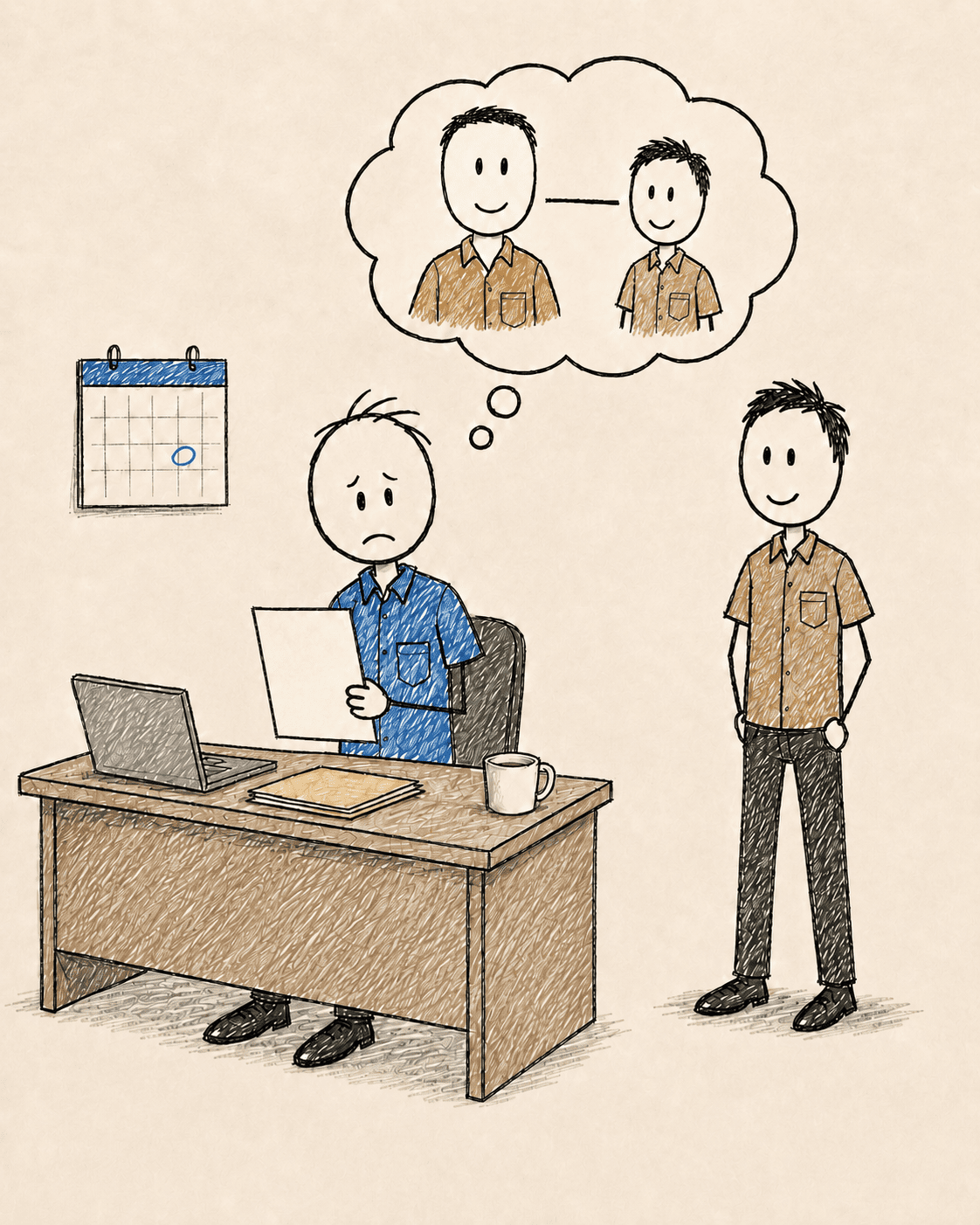
Is it him, or is it the job?
You don’t actually know if Marcus is bad at this. You think he is. The callbacks say maybe. But you’ve never written down what the job is supposed to be. Not for him, not for anybody. “Doing it right” is a picture in your head, and you’ve spent two years grading your friend’s kid against a picture only you can see. Through a friendship that was never going to let you grade him straight anyway.
So you’re stuck twice. Once because he’s your friend. And once because even if he weren’t, you’d have no clean way to tell whether the trouble is Marcus or the way the work has always run here. Firing doesn’t reach that second one. The next guy walks into the same job with the same nothing written down, and a year from now you’re on the phone with a customer cleaning up his work instead.
None of that is a thing you did wrong. The shop grew up with everything living in your head. What good looks like, what the job actually is, where the line sits. It never got written down because there was never a Tuesday slow enough to write it. So Marcus gets judged on a feeling, and so does everybody else, and so will whoever you hire in the spring.
Same problems. Different week. Even with the people you’d never say a word to.