
The software rollout lasted about six weeks before it quietly died. Half your crew went back to texting job notes from the truck, and the office kept the old dispatch board taped up next to the monitor just in case. By month three you froze on trying anything new. You’ve been running the board by hand ever since.
Why did the last software rollout fail?
Most rollouts fail for one reason: the tool got dropped into the business instead of built into how the crew already works, on the truck and in the office. Training happens once, then the daily grind of service calls wins the crew back within a few weeks.
What actually goes wrong when a rollout collapses
- Training happened once, up front, before callbacks and back-to-back service calls swallowed everyone’s attention again
- Nobody was responsible for making sure techs actually opened the app between jobs, not just at onboarding
- The system didn’t match how a job actually moves: quote, dispatch, rough-in, trim, invoice, follow up
- Typing notes on a phone between panel swaps took longer than the old way, so the crew quietly went back to it
- Nothing was in place for what happens when a tech forgets, or a CSR reverts to the paper board because it’s faster that day
The problem was never the software you picked. It’s that nobody built the bridge between the tool and how your crew actually runs a service call.
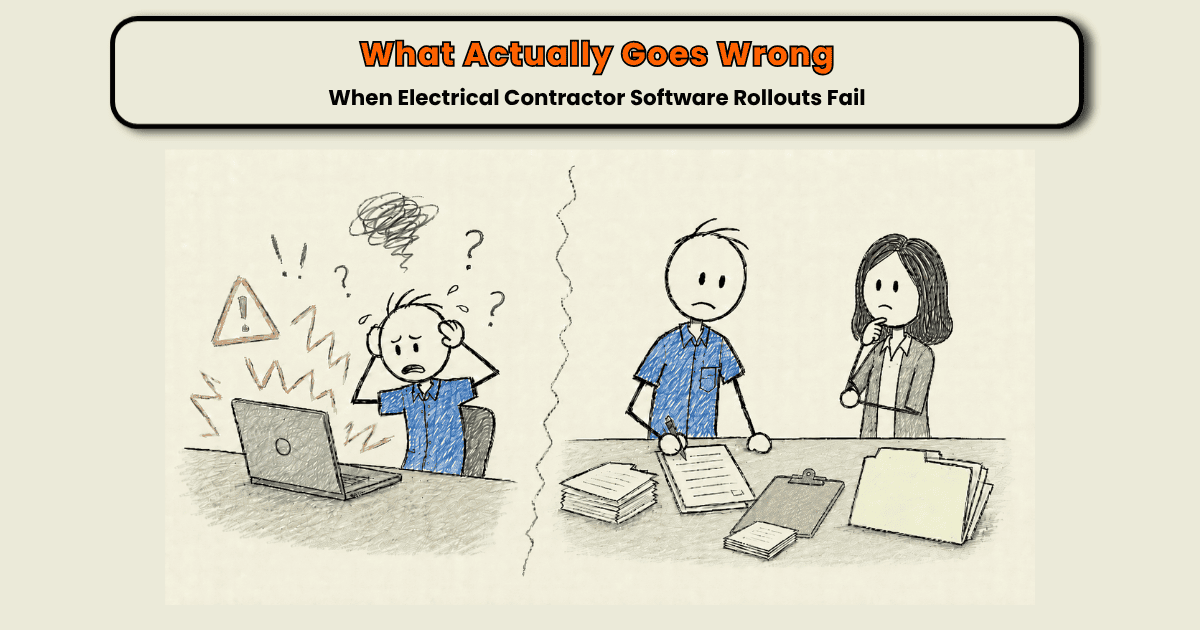
Why you froze, and why that makes sense
Freezing after that makes sense. You watched real money and real time disappear with nothing to show for it: a subscription, a training day, a stack of half-finished digital job notes nobody ever bothered completing. Now caution feels like the responsible call, not the stubborn one. Somewhere there’s probably still a login nobody opens, tied to a monthly charge that never got canceled. A small, recurring reminder of the last time you tried.
That’s not you being difficult. That’s you not wanting to walk the crew through another six weeks of confusion for nothing, not with GC deadlines and callbacks already eating the week.
The freeze has a cost too
The paper board and the group texts aren’t free either. They just hide the cost better. A missed follow-up on a bid doesn’t show up as a line item. A schedule that lives in your dispatcher’s head doesn’t show up until she’s out sick and nobody else knows which truck is headed to which panel swap.
Six weeks and a bad rollout don’t mean the shop can’t run on something better. They mean the last attempt was built wrong. That’s a different problem than the one you’ve been carrying around since. The old board still works, technically. It’s just costing you more than the subscription ever did. You just can’t see it on a report.