
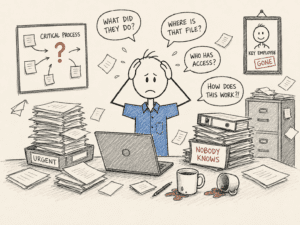
 find once she was gone:
Your Content Goes Here
Diane ran the office for ten years. Payroll, scheduling, vendor accounts, the customer history nobody else ever had to learn. She gave two weeks’ notice and left on good terms and by the following Tuesday, three people were standing around her old computer trying to figure out how she ran payroll.
Why does losing one employee set the whole office back?
Because the work she did was never written down. It lived in her head, her inbox, and a stack of habits she never had a reason to explain. Here’s what nobody could find once she was gone:
- The vendor that kicks back any order without the PO number in the subject line – Diane always put it there.
- The supplier who only takes orders by phone, before ten.
- The scheduling software that double-books unless someone runs the monthly workaround that lived in her head.
None of it was written down. The work just never had anywhere to live except inside the person doing it.
Do I have to replace her right now?
You can hire someone capable next week and still lose months. The work Diane did was never written down, it ran on her, because it was never built to run anywhere else. So the new person starts from a blank screen instead of stepping into something that already exists. The fix is capturing how the work actually gets done while the person who knows it is still in the building.
What does losing a key employee actually cost?
One resignation can set a business back months while the team rebuilds what was never documented.
How do you document what an employee knows before they leave?
Write down how the work actually gets done while the person who knows it is still there. Three things to capture first:
- The recurring tasks — payroll, scheduling, ordering — step by step, the way they’re actually done.
- The vendor and customer quirks — who needs a PO number, who only takes phone orders before ten.
- The workarounds — the monthly fix that keeps the software from double-booking, and every other “you just have to know to do this” habit.
Done once, properly, the work no longer lives or dies with one person. The next time someone gives notice, the system stays even when they go.
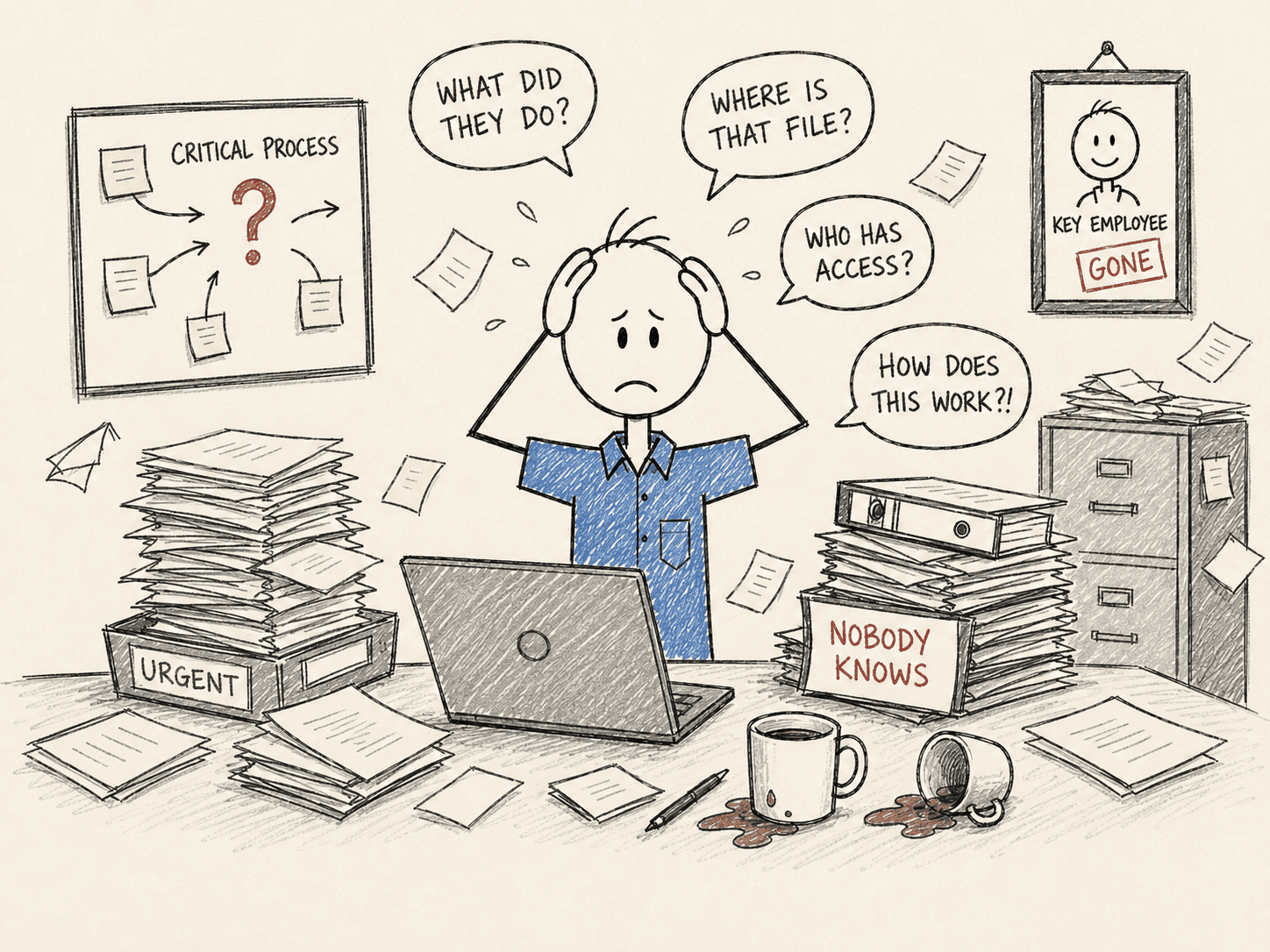

What changes once the work is written down?
| When it lives in one person's head | When it's written down |
|---|---|
|
|
|
|
|
|
|
|
The new hire gets up to speed in days instead of weeks — because the knowledge is documented, not just in someone's head.
Diane's chair got filled. The harder gap was the ten years she carried out in an afternoon — the part no two-week handoff was ever going to cover. The next time someone gives notice, the only thing that decides how bad it hurts is whether the work was ever written down.
Your Content Goes Here
Your Content Goes Here
Your Content Goes Here
Your Content Goes Here